Decreasing Pelvic Floor Tension
You might be surprised to hear that the vast majority of my patients who are coming in for pelvic floor physical therapy have too much tension in their pelvic floor muscles. Many people think that pelvic floor dysfunction is just weakness of these muscles, and that doing kegels and squeezing all the time will solve the problem. However, the reverse is often (dare I say usually) the case!

Let’s face it, we are living in a stressful world right now. It’s hard to read through my morning newsletter without holding my breath and shaking my head at the craziness that is described there. We live in a high-stress society that is focused on achievement, the highest earning potential, and constantly comparing ourselves to others. Social media exacerbates this problem by bombarding us with what we should be doing and giving us unrealistic expectations for our lives. It is no wonder, therefore, that people are walking around holding that tension in their bodies.
It is well known that stress can lead to increased tension in some of our muscles like our jaw, upper traps, and even our gut. However, did you know that the pelvic floor is also one of these emotional muscle groups? It is easy for people to hold their stress in their pelvic floor muscles without realizing it. If the pelvic floor muscles are too tight, they will not be able to function through their full range of motion, and this can lead to a wide range of symptoms including pain, leakage, constipation, and more.
So how can we reverse this tension-holding pattern in the pelvic floor? There are several strategies that I like to use with patients that are both directed at the pelvic floor muscles themselves, as well as the whole body. After all, the pelvic floor does not function in isolation - it is part of our whole being, and we have to take into consideration the entire mind-body connection.
Number 1:

Breathing!
Our pelvic floor muscles are directly connected to the function of our diaphragm through the core canister. (If you want to dive more deeply into this, check out this blog post I wrote: What Does Breathing Have to Do with the Pelvic Floor?) When we inhale, we should get natural elongation and expansion of our abdominal and pelvic floor muscles. This lengthening allows them to release tension, just like if you were to stretch your hamstrings.
By focusing on deep diaphragmatic (or belly) breathing, and visualizing breathing down into your holes (I know, a fun visual 😉), you should be able to feel a slight release of tension. Diaphragmatic breathing also stimulates the parasympathetic nervous system, which is our “rest and digest” system, so it can help calm our whole body of stress. I like to practice this at night to help me wind down before bed.
Number 2:
Stress relief techniques are key.
If you are a high-stress individual, your body is certainly manifesting some of that into physical symptoms. This can include muscle tension like we’ve been talking about, or even things like high blood pressure or insomnia. Avoiding stress entirely is impossible. However, I encourage you to incorporate some type of stress relief technique into your daily life. That can look different for everybody, but below are some ideas that may help:
Exercise!
Journaling
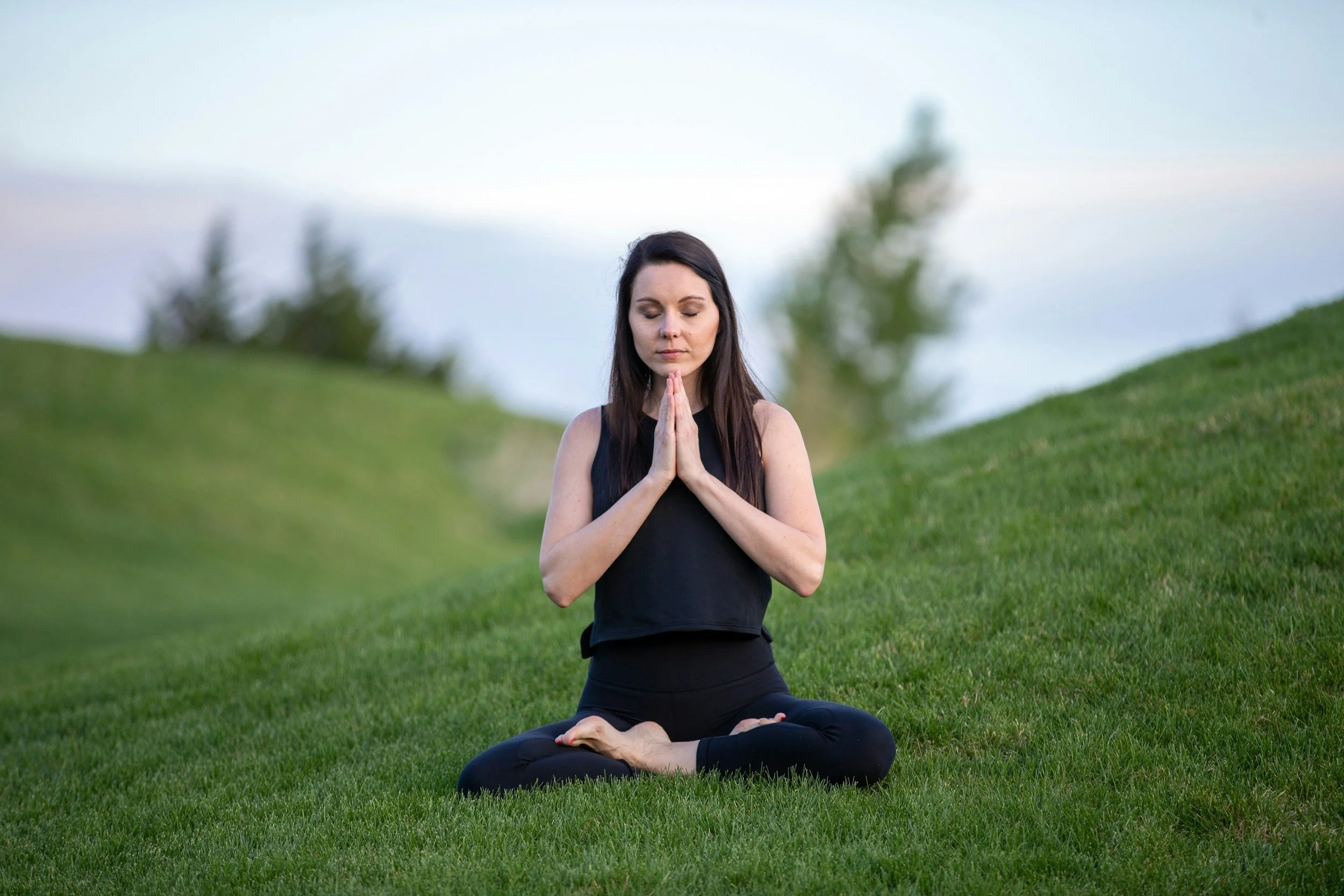
Meditation practices
Progressive muscle relaxation
Deep breathing techniques
Getting outdoors
Spending quality time with friends or family
Number 3:

Stop clenching!
It is amazing how many people are walking around constantly clenching their glutes and/or abs. This also results in squeezing of the pelvic floor muscles, and when any muscle is contracted for too long, it is going to become unhappy. Remember our muscles are supposed to be relaxed when we aren’t actively using them. So if you are standing or sitting around, unclench that butt and stop sucking in that tummy.
Sometimes doing contract/relax cycles can help you to feel that release if you have trouble telling if you are squeezing or not.
Number 4:

And lastly, practice healthy lifestyle habits.
How you eat, sleep, and hydrate are going to affect your entire well-being, and that does translate to the pelvic floor muscles. Getting enough sleep, water, and ensuring a nutritious diet are things I always bring up with patients because these may be the first things to go out the window when life gets hectic. However, these should be priority areas that you make time for regardless, and that will trickle down to positive outcomes in other areas of your life.
Life gets stressful, and our pelvic floor muscles often endure the brunt of that stress. Take the time to schedule in stress-relief techniques, deep breathing, social connection, and healthy lifestyle habits. Your pelvic floor will thank you 😊
If you want to work with Lavender Roots for pelvic floor PT, contact us or schedule an appointment today!