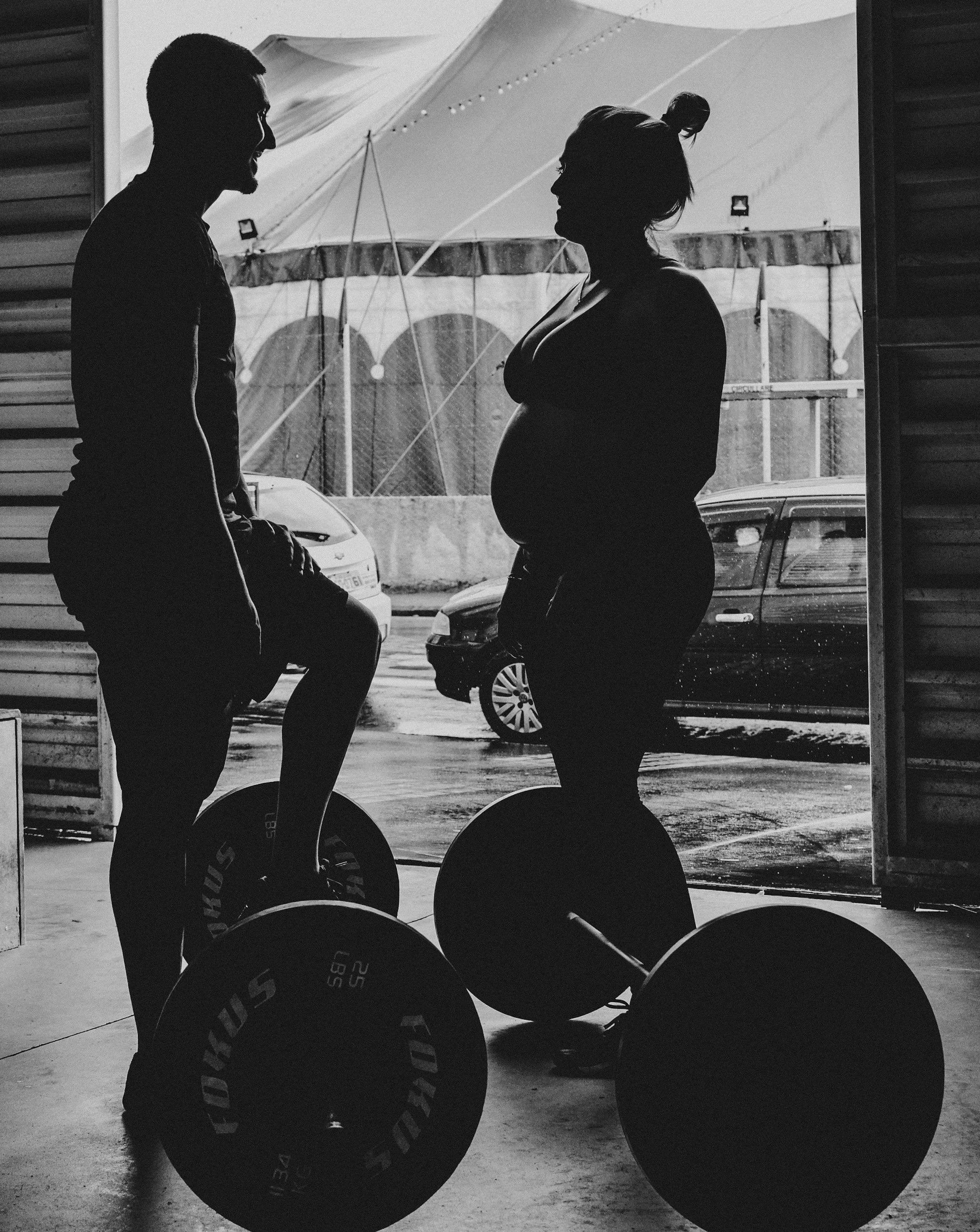
Should I work out when I’m pregnant? Will it harm my baby? Should I keep my heart rate low? Should I avoid lifting heavy weights? Should I avoid certain movements? What is safe?!
The list of common questions about exercise during pregnancy could go on and on. There’s so much misinformation and conflicting advice on this topic. Whether you ask Dr. Google, your friends, your mom, or your OB-GYN, you may get different answers, and some of them are just plain wrong. So let me help clear up some misconceptions and show you what the research says.
What does the research say?
The American College of Obstetricians and Gynecologists (ACOG) is the leading professional membership organization for OB-GYNs. Its 2020 statement in Obstetrics & Gynecology is very clear.
“Women with uncomplicated pregnancies should be encouraged to engage in aerobic and strength-conditioning exercises before, during, and after pregnancy.”
ACOG also reports that there is no evidence to suggest that physical activity during pregnancy causes miscarriage, poor fetal growth, musculoskeletal injury, or preterm delivery.¹
How much should I exercise during pregnancy?
ACOG recommends at least 150 minutes of moderate-intensity aerobic exercise per week, plus strength training. And women who were already exercising at a vigorous intensity before pregnancy can continue doing so!
So guess what? That is the same as the physical activity guidelines for the general, non-pregnant population. If you were exercising before pregnancy, you don’t need to change anything as long as you aren’t experiencing adverse symptoms or dealing with any medical complications during pregnancy. And if you weren’t exercising before pregnancy? What a great time to start!
Can I still lift heavy weights?
There’s no reason to avoid lifting heavy weights during pregnancy. Some of your lifts may start to look different in the third trimester as your belly grows, though. You may need to shorten your range of motion or lighten the weight if certain movements become uncomfortable or it gets harder to maintain good form. But if you’re feeling good, aren’t having any symptoms, and can maintain good form, there’s no need to scale back! The old “don’t lift over 25 pounds” is completely outdated, not supported in the research, non-functional and non-sensical.
So why is exercise during pregnancy important?
Exercise during pregnancy isn’t just about feeling good, although I bet it will help you feel good too! It has been shown to decrease the incidence of gestational diabetes, hypertensive disorders, preterm birth, C-section, and excessive weight gain during pregnancy.¹
In another recent study, scientists even found a lower risk of postpartum depression in those who exercised during their pregnancy.²
There’s also some really interesting research on how exercise during pregnancy might affect the baby’s metabolism later on. In a study on mice, exercise during pregnancy helped prevent blood sugar problems, high insulin levels, and excess body fat in the offspring of mothers fed a high-fat diet.³ So exercise might not only improve the health of mom, but also baby!
My perspective as a pelvic floor PT
Anecdotally, I’ve noticed that patients who prioritize strength training and stay active during pregnancy seem to experience fewer symptoms later on, like pelvic girdle pain, low back pain, and hip pain.
During pregnancy, your body produces more of a hormone called relaxin, which increases ligament laxity. This means your joints become more mobile, and your body needs stability to manage that extra movement. Strengthening exercises help build that stability, especially when you work on muscles like those in your core and hips. This can help take stress off areas of the body that tend to take on more load during pregnancy.
What symptoms should I watch for?
Some symptoms to look out for while lifting during pregnancy include the following.
Pain
Urinary leakage
Pelvic pressure or heaviness
Vaginal bleeding
Contractions
Dizziness or lightheadedness
Headache
Chest pain
When should I modify or avoid exercise?
Talk to your doctor about your exercise program if you have any of the following potential contraindications.
Heart disease
Restrictive lung disease
Cervical insufficiency
Persistent bleeding in the second or third trimester
Placenta previa after 26 weeks
Ruptured membranes or preterm labor
A multiple pregnancy at risk of preterm birth
Preeclampsia or pregnancy-induced hypertension
Severe anemia
If none of these apply to you, don’t be afraid to keep training like the athlete you are. And if you’re new to exercise, congratulations! You’re becoming a healthier version of yourself for both you and your baby. 💜